Arbeitsblatt: Plural of nouns
Material-Details
Nomen in den Plural setzen und in Gruppen einteilen, inkl. Lösungen
Englisch
Grammatik
klassenübergreifend
1 Seiten
Statistik
108237
924
5
08.12.2012
Autor/in
renini (Spitzname)
Land: Schweiz
Registriert vor 2006
Textauszüge aus dem Inhalt:
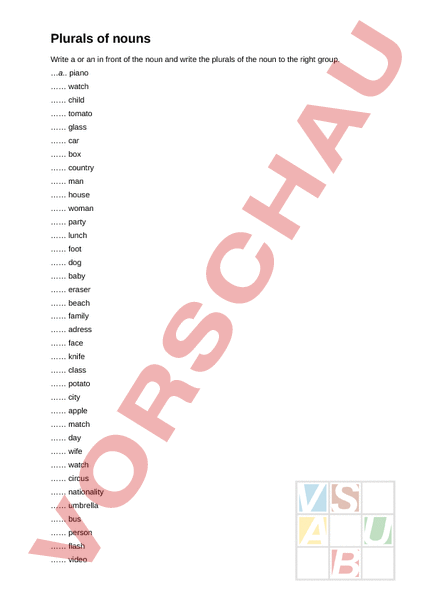
Plurals of nouns Write or an in front of the noun and write the plurals of the noun to the right group. a piano watch child tomato glass car box country man house woman party lunch foot dog baby eraser beach family adress face knife class potato city apple match day wife watch circus nationality umbrella bus person flash video key wolf wish boy mouse Regelmässiger Plural: -s anhängen pianos Wenn einem Zischlault (-s, -x, -sh, -ch) nicht schon ein stummes –e folgt (wie z.B. bei house, face), muss ein eingefügt werden: Plural also -es Endet ein Substantiv auf Konsonant -y, so wird dieses zu – ies: Endet jedoch ein Substantiv auf Vokal -y, so wird dieses –y beibehalten: Viele (aber nicht alle )Substantive auf –o enden im Plural auf –oes, wenn ein Konsonant voraus geht. Substantive, die auf –f oder –fe endet, bilden den Plural mit – ves: Unregelmässige Pluralbildung: Plurals of nouns Write or an in front of the noun and write the plurals of the noun to the right group. a piano a watch a child a tomato a. glass a. car a. box a. country a. man a. house a. woman a. party a. lunch a. foot a. dog a. baby an. eraser a beach a family anadress a face a.knife a class a potato a city anapple a. match a day a wife a.watch a circus a nationality an umbrella abus a person a flash a. video a key a wolf a. wish a boy a mouse Regelmässig: -s anhängen pianos cars houses dogs erasers faces apples umbrellas videos Wenn einem Zischlaut (-s, -x, -sh, -ch) nicht schon ein stummes –e folgt (wie z.B. bei house), muss ein eingefügt werden: Plural also -es boxes lunches watches matches beaches classes glasses adresses buses flashes wishes circuses Endet ein Substantiv auf Konsonant -y, so wird dieses zu –ies: countries parties babies families cities nationalities Endet jedoch ein Substantiv auf Vokal -y, so wird dieses –y beibehalten: days boys keys Viele (aber nicht alle , wie z.B. pianos Substantive auf – enden im Plural auf –oes, wenn ein Konsonant voraus geht. tomatoes potatoes vilcanoes mit –ves: knives wives wolves Substantive, die auf –f oder –fe endet, bilden den Plural Unregelmässige Pluralbildung: children men women people mice feet